Femme Finale! Critic and Journalist Kristine McKenna: Dec. 10


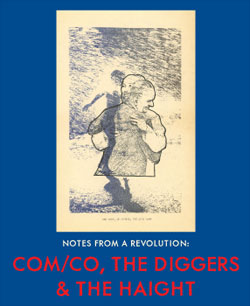
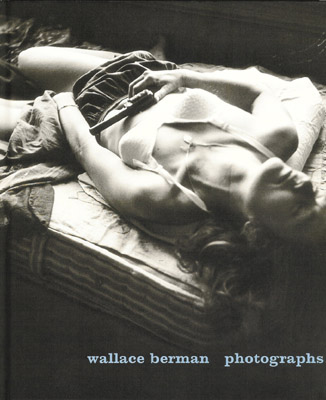
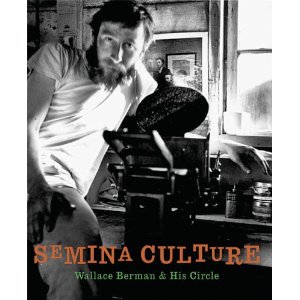
Kristine McKenna is a widely published critic and journalist who wrote for the Los Angeles Times from 1977 through 1998. Her profiles and criticism have appeared in Artforum, The New York Times, Artnews, Vanity Fair, The Washington Post and Rolling Stone Magazine, and in 2001 a collection of her interviews, Book of Changes, was published by Fantagraphics. A second volume of interviews, Talk To Her, came out in 2004. She was co-curator of Semina Culture: Wallace Berman & his Circle, a group exhibition that opened at the Santa Monica Museum of Art in 2005, and traveled to five U.S. museums, and she co-edited the monograph, Wallace Berman Photographs, which was selected as one of the 50 best art books of 2007 by AIGA. In 2009 she launched the publishing imprint, Foggy Notion Books, in partnership with designer Lorraine Wild, and editor Donna Wingate, and that same year her book, The Ferus Gallery: A Place to Begin, was published by Steidl. She edited a monograph on work by Ann Summa, The Beautiful & the Damned: Punk Photographs by Ann Summa, that was published in fall of 2010 by Foggy Notion Books. She produced and co-wrote The Cool School, a documentary about L.A.’s first avant-garde gallery that was released in 2009, and that year she organized She: Work by Wallace Berman & Richard Prince, an exhibition at Michael Kohn Gallery, and edited the exhibition catalogue, published by D.A.P. Her 2011 survey exhibition of photographer Charles Brittin, at Michael Kohn Gallery, was accompanied by the monograph, Charles Brittin: West & South, published by Hatje Canz. In 2011, she edited The Collected Writing of Richard Prince, for Foggy Notion Books, and in 2012 co-edited Notes From a Revolution: Comco, the Diggers & the Haight, published by Foggy Notion/Fulton Ryder, Inc, She is presently working on Feelin’ Groovy: Clothing & Costume in the American ’60s, Panic in Detroit: Leni Sinclair’s Photographs of the Michigan Underground, 1963-1973, a compilation of writings on Jewish mysticism, and Los Angeles in the ‘60s: Images from the LAPD Photo Archive.

Optional prep for Christine’s visit:
Find out about the film she produced and co-wrote, The Cool School, and watch the trailer here.

Designer, humanist and futurist Marc Alt visits Nov. 26

Marc Alt is a designer, humanist and futurist. He has dedicated his career to connecting design, technology and ecology in the service of making a world that works for all living things. Marc was founder and co-chair of AIGA Center for Sustainable Design and served on the advisory boards of Designers Accord and Design Ignites Change. He has been an advisor to companies such as BMW, MINI USA, Volvo, AECOM and OgilvyEarth and is actively involved in a number of urban mobility and smart cities initiatives. He was an Adjunct Professor at the NYU MFA Interactive Telecommunications Program (ITP) and is a frequent guest critic. Marc lectures internationally and presents workshops on living systems, urbanism, mobility, resiliency, ecological design and ancestral knowledge. He is founder of Open Source Cities, a technology and design platform for the future of cities (currently in development).

Readings/Viewings to prepare for Marc’s visit:
Reading/Viewing: Open Source Cities Tumblr
Reading: Beyond Smart Cities: Interview with Tim Campbell Part 1
Inspirational/Informational Websites:
Biomimicry 3.8
Ask Nature
Earth Dashboard

Marc’s Sustainable Design Guidelines to Apply to Design/Life/Work from his Presentation:

Organisms in a mature eco-system (Biomimicry)

  • Use waste as a resource
  • Diversify and cooperate to fully use the habitat
  • Gather and use energy efficiently
  • Optimize rather than maximize
  • Use materials sparingly
  • Don’t foul their nests
  • Don’t draw down resources
  • Remain in balance with the biosphere
  • Run on information
  • Shop locally

Guidelines for sustainable design:

  • Design with life cycle constraints
  • Dematerialize products into services
  • Use appropriate local technology and resources
  • Co-create with and for communities and people
  • Design for disassembly, take-back and recycling
  • Support third party certification
  • Minimize materials, energy and inputs
  • Use non-toxic/recycled/re-claimed resources
  • 100% renewable energy
  • Zero waste

Documentation of Marc’s visit by Tara Tannenbaum here.


November 19: Christine Wertheim, poet, critic, performer and curator

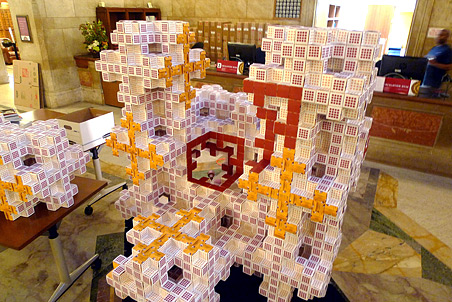
Christine Wertheim is the Chair of the MFA Writing Program at CalArts and poet, critic, performer and curator with a doctorate in literature and semiotics from Middlesex University. She’s taught critical theory and studio practice at Goldsmiths College and funded by a grant from The Annenberg Foundation she designed and ran a series of annual conferences on experimental writing. Christine has lectured and performed internationally, most recently at Soundeye poetry conference in Ireland, and The Walker Art Center. She co-directs the Institute For Figuring (IFF), which curates exhibitions and seminars on the intersection of art, science and mathematics. The IFF has received grants from The Andy Warhol, The Annenberg, and numerous other foundations. Projects from the IFF have been on view at the Cooper-Hewitt National Design Museum, The Walker Art Center, and New Children’s Museum, San Diego among many others.

Check out The Institute For Figuring here and Christine’s work here.

Legendary product designer, Tucker Viemeister, November 5

Tucker Viemeister, Director, Special Projects with Ralph Appelbaum Associates in New York where he is working on branded experiences and interpretive environments around the world. Tucker is most famous for the OXO Good Grip kitchen tools deigned with Smart Design, the company he helped found. Previously he was EVP of Razorfish, Ambassador of frogdesign, President of Springtime-USA and Lab Chief at Rockwell Group. He designed things for clients including Apple, Coca-Cola, Cuisinart, Black & Decker, Remington, Viking, J&J, Timex, Levi’s, Phat Farm, Joe Boxer, Nestlé, Unilever, Motorola, Toshiba, Sharp, Seibu, Toyota, Nike, Knoll, Steelcase, Kate Spade, Cosmopolitan casino, Yotel, Venice Biennale, and the NYC Board of Education. His work is in MoMA and awards include the first Presidential Design Award. He teaches and writes, is the Vice President of the Architectural League.

To prepare for Tucker’s visit:
Please read the following…
Tucker Viemeister, “Beautility
Tucker Viemesiter, “Psychonomics: Connecting Hands and Hearts
Tucker Viemeister, “When Design is Also a Teacher

Tucker’s Presentation here.

Documentation of Tucker’s visit and fantasy project by Lily Sin: Lily_Viemeister.

Landscape architect, Allen Compton to visit October 29

Allen Compton is a licensed landscape architect and award-winning designer who has worked for AHBE Landscape Architects and Rios Clementi Hale Studios. He holds a BS in physics from Davidson College, a BSLA from Cal Poly Pomona, and an MFA from the California Institute of the Arts. Allen has designed a wide array of public and private projects, ranging from streetscapes to public parks to college campuses to urban housing, and from urban design guidelines to master plans for private, commercial, and institutional clients. His designs integrate the unique character of each site and seek to respond to the human needs of the project.

SALT Landscape Architects, www.s-a-l-t.com

To prepare for Allen’s visit:
View “The Social Life of Small Urban Spaces” by William H. Whyte. This a Vimeo video, approximately 58 minutes long. According this Allen, this is “A classic in landscape architecture / urban design. He was one of the first (perhaps the first) to use a camera to investigate how people used / populated public spaces in the city.”

Allen’s presentation here.

Documentation of Allen’s visit and fantasy project by Angie Son: Angie Son_Allen Compton


Josh Beckman, artist and exhibition designer: October 22

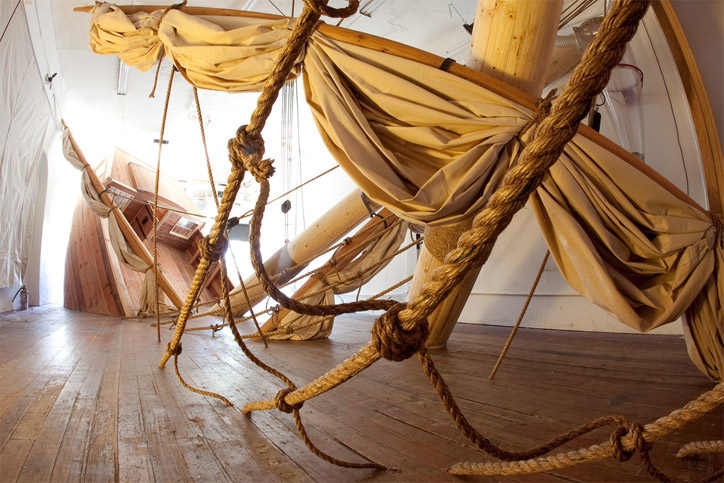
A Southern California native, Josh Beckman attended UC Santa Barbara where he participated in the Honors Studio program & received his B.A. with an emphasis in painting & sculpture. Fascinated by the inherent narrative of landscape – the textures, space & variation of the Pacific & Southwest have long been an inspiration & influence in Josh’s work which often aims to capture moments just either side the fulcrum of turbulent events.

With an interest in materials & the process of fabrication he has always sought the hands-on environment. Over the years this has led to the development of a particular skill-set by way of fabricating for artists, building furniture, working at Hasting’s Plastics, Merv Griffin Studios & a toy prototyping company, by designing & constructing sets & props for films, events & a carnival company, collaborating with his wife’s floral studio, through exploration on his own projects, & culminating with his job as an exhibit designer.

He has worked at the Los Angeles Natural History Museum for nearly a decade in varying fabrication & design capacities on numerous temporary & permanent exhibits, and is currently working on a new long-term exhibit about the history of Los Angeles.

Josh has shown his own installation work at High Desert Test Sites, Furthermore Gallery, Mario’s Furniture, and Machine Project. He is currently exploring the ceramic medium and remodeling his kitchen.

To prepare for Josh’s visit:

Watch Gaspar Noe’s  “Enter The Void.” There’s a BluRay copy in the CalArts AudioVisual library or available on Instant Queue from Netflix. The abstract for the film from the CalArts library: “A brother and sister are trapped in the hellish night time world of Tokyo, where he deals drugs and she works as a stripper. A crime gone bad leads to shocking violence and then moments of transcendence in which the movie plunges viewers into death and rebirth like no film has ever done before.”

This feature film is 143 minutes long, so maybe one of you wants to arrange a group viewing for the class and anyone else whose interested.

As a side note, design critic Rick Poynor found the titles for this film so interesting that he wrote about them for Eye magazine: “Critique: A soul adrift in neon limbo: The credits of Gaspar Noé’s Enter The Void suck the viewer into an immersive maelstrom of lettering.”Be sure to also note the link to the heart-stopping film titles at the bottom of the posting or you can view them here.


Next up: Editor, publisher, writer, critic, Mimi Zeiger

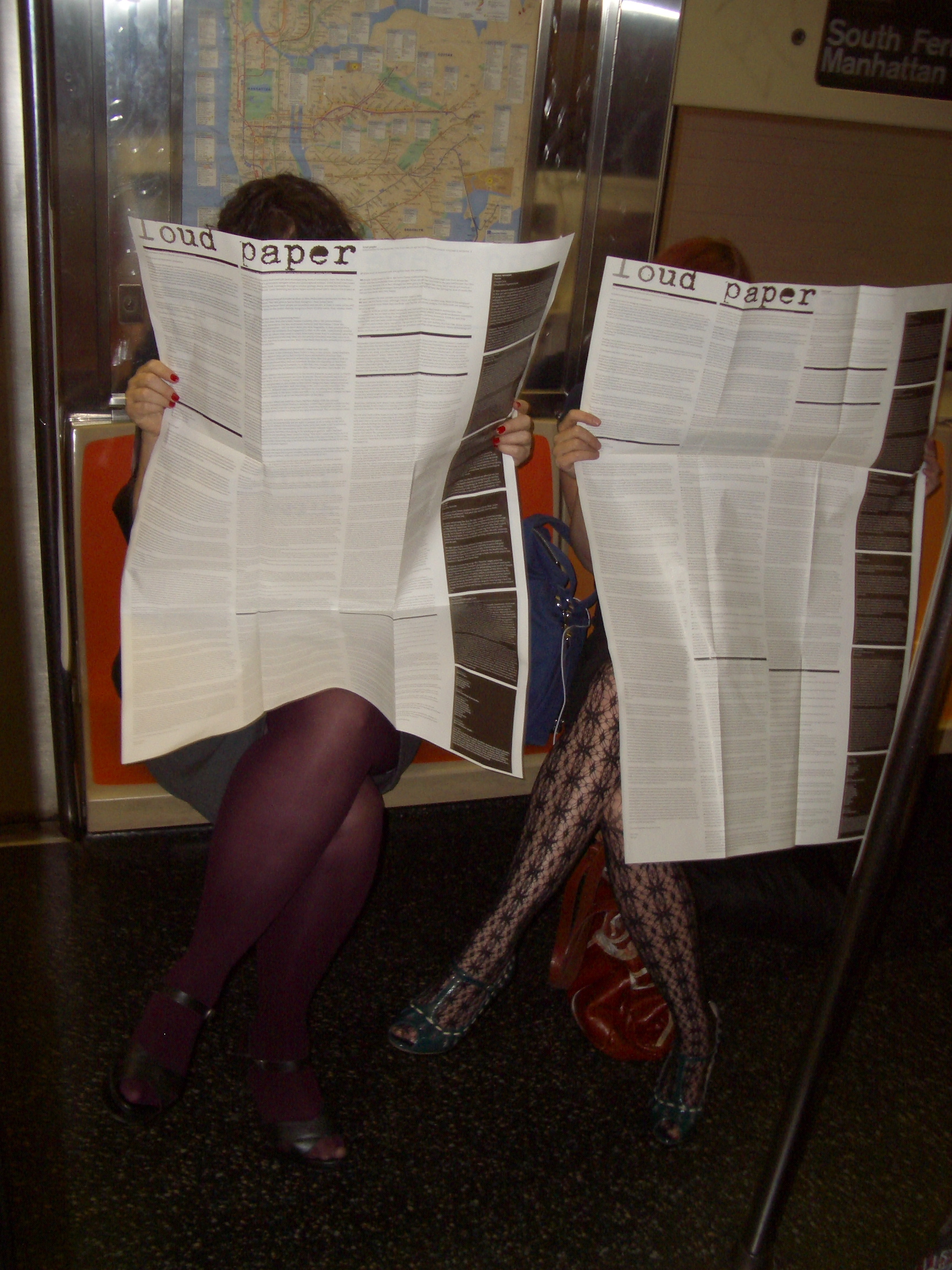
Mimi Zeiger is editor and publisher of loud paper, a zine and blog dedicated to increasing the volume of architectural discourse. She is a founding member of #lgnlgn, a think tank on architecture and publishing. The group’s work has been shown at Urban Design Week, the New Museum, Storefront for Art and Architecture, pinkcomma gallery, and the AA School.

As a writer and critic, she covers art, architecture, urbanism and design for a number of publications including The New York Times, Domus, Dwell, and Architect, where she is a contributing editor. Zeiger is author of New Museums, Tiny Houses and Micro Green: Tiny Houses in Nature. She’s lectured internationally on “The Interventionist Toolkit,” a series of articles on alternative urbanist practice she wrote for Places Journal.

Always obsessed with the intersection of architecture and media, she is Director of Communications at Woodbury School of Architecture in Burbank. She has taught at Parsons New School of Design, the California College of the Arts (CCA) and at the Southern California Institute of Architecture (SCI-Arc.) Her cross-disciplinary seminars explore the relationships between architecture, art, urban space, and popular culture. She holds a Master of Architecture degree from SCI-Arc and a Bachelor of Architecture degree from Cornell University.

You can find her on Twitter here.

To prepare for Mimi’s visit:
Read: “The Street” from The Species of Spaces and Other Places, by George Perec, pages 46-56. Scroll to those pages on the Scribd. copy of the book here.
Read “Publishing to the Power of Two,” an architecture report by Shumi Bose, originally published in Domus 961 / September 2012
Read “Blue Lobsters” by Mimi Zeiger

Mimi’s presentation here:
Mimi Zeiger PresentationSm

Documentation of Mimi’s visit and fantasy project by Francesca Ramos:
MimiZeiger_Francesca


Gilda Haas, Sept. 24: Complicated things. Simply Explained.

As Gilda describes on her @Dr_Pop Twitter id, “We live in a complicated and confusing world. Dr. Pop is here to break it and down and tell it like it is.” That ideal iswhat inspired her to create her alter-ego, Dr. Pop. Like the Center for Urban Pedagogy, Dr. Pop is part of an activist wave who recognize that to facilitate social, economic, and environmental justice people need help to understanding complex systems in order to negotiate them. Gilda has also been an advocate for the contributions of graphic designer as part of this effort at “explaining” and thus an example of important and fruitful collaborations.

Her official bio:
Gilda Haas is an organizer and educator who has been helping grassroots organizations build economic development from the ground up for the past thirty-five years. Ms. Haas been teaching community economic development at UCLA’s Department of Urban Planning for about 30 years, where she also established the Community Scholars Program. She was the founding Executive Director of Strategic Actions for a Just Economy, a founder of the national Right to the City Alliance, and has developed business plans for democratic enterprises such as a credit union and land trust. Gilda currently works as a core faculty member in Antioch University’s new Urban Sustainability program; as her alter-ego, Dr. Pop (drpop.org); and coaching the next generation of leaders in the movement for social, economic, and environmental justice.

A video about Gilda explaining her work and interests can be found here.

To prepare for Gilda’s visit:
Take a look at Dr. Pop’s review of the book, The City and the City by China Mieville AND view the the film: Bogota, Change ( a Danish documentary with English sub-titles; about an hour long). Dr. Pop said she was inspired by Antanas Mockus’ creative strategies when he was mayor.

Documentation of Gilda’s visit by Tara Tannebaum here:
Gilda Haas_Tara Tannenbaum


John Kaliski’s presentation, “What is urban design?”


Monday, September 17, John visited the “Devils” class and spoke about his practice and his work as centered in collaboration — often with community groups. What was immediately notable about John was his engagement with the class — in particular asking everyone about who they were.  This ability to engage and connect with others seems crucial to any designer hoping to succeed doing work with a “client” who isn’t just one individual, but many. John spoke about his background designing skyscrapers and the challenge of designing the look of things without understanding why that ultimately led him to his interest in urban design. His presentation defines urban design while it also describes its origins. What was revealed most significantly was the way in which different community participate in the process of set the right balance for their desires and needs, driven most significantly in trying to achieve balance between efficiency and justice. The process of a community-based collaboration was demonstrated through a case study — the Green Street Project.

Below is a pdf of John’s presentation, “What is Urban Design?”

JKaliski_What is Urban Design

John Kaliski to visit September 17

John Kaliski, AIA, Principal, John Kaliski Architects, Los Angeles, California

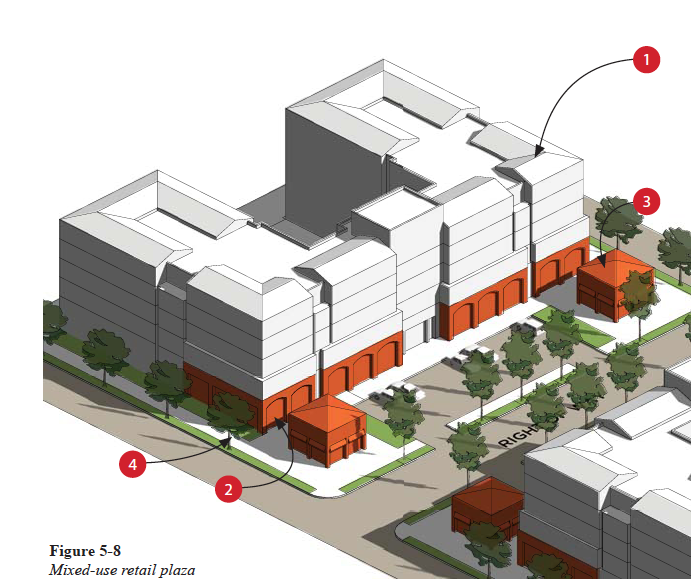
John Kaliski integrates public concerns and narratives into urban design and architecture. Founder in 2000 of John Kaliski Architects, an architecture and urban design practice located in Los Angeles, California, his projects include affordable housing, urban design plans, and environmental design consulting for government agencies. Present projects include design of the Ocean Park Boulevard Complete Green Street in Santa Monica, the preparation of multi-family and ,mixed-use citywide design guidelines for this same city, and the design and urban design alternatives components of Metro’s East San Fernando Valley Rapidway located on Van Nuys Boulevard in the City of Los Angeles. In 1999 and 2009 Random House published his essays in Everyday Urbanism. This book posits the “everyday” as an interactive framework to critique normative and avant-garde theories of architecture, urban design, and urbanism. A graduate of Yale University (B.A., M.Arch.), Kaliski has taught at the University of Houston, SCI-Arc, The University of Michigan, Cal Poly Pomona, and USC. He resides in mid-city Los Angeles where his civic activities include service as the 2009 president of the American Institute of Architects Los Angeles Chapter, member of the Greater Wilshire Neighborhood Council Land Use Committee, appointed member of the Mayor’s Design Advisory Panel, and architect to the Hollywood Farmer’s Market.

His website.

The reading John offered for his visit is Jonathan Barnett’s essay “Designing Cities without Designing Buildings.”